
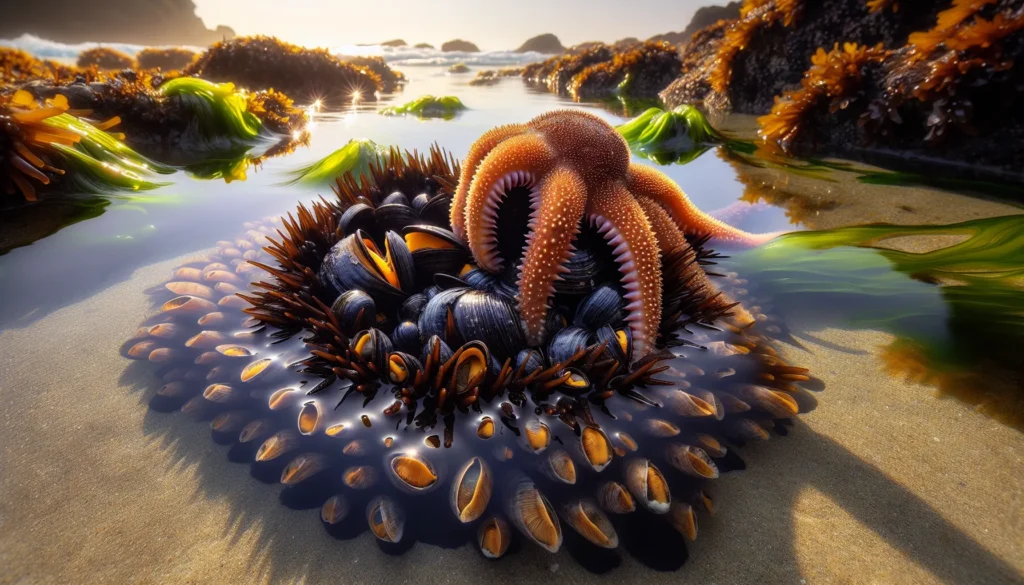
If you’ve ever knelt by a tide pool or watched a city park come alive at dusk, you’ve probably wondered about the quiet negotiations happening between all those species. That curiosity sits at the heart of a simple question with surprisingly rich layers: what is a community in biology? In short, it’s the living web formed by different species sharing a place, and each other. In this guide, I’ll walk you through how biologists define communities, what shapes them, how they’re measured, and why it all matters for a changing world. Along the way, I’ll share examples you can picture, and maybe even go see for yourself.
Key Takeaways
- A community in biology is all populations of different species that live and interact in the same place and time, positioned above populations and below ecosystems.
- Assess community structure by tracking species richness, evenness, and composition, and by mapping trophic levels and food webs to follow energy and nutrient flow.
- Interactions—competition and niche partitioning, predation and herbivory, mutualism, commensalism, and facilitation—determine which species persist and how diverse a biological community remains.
- Communities change via succession and disturbance, with keystone species like sea otters or beavers driving outsized effects on stability, diversity, and habitat.
- Measure and compare communities using alpha, beta, and gamma diversity plus Shannon or Simpson indices, standardized field methods (quadrats, transects) and modern tools like eDNA and metabarcoding, supported by network analyses and null models.
- Human impacts—habitat loss, invasive species, and climate change—reshape biological communities, while conservation that restores interactions, movement corridors, and keystone species can rebuild resilience.
Definition And Place In Ecological Organization
The Ecological Community: A Working Definition
When I talk about a biological community, I mean all the populations of different species that live in the same area at the same time and interact, directly or indirectly. Picture a prairie: grasses, wildflowers, insects, birds, fungi, soil microbes, coyotes. They’re not just coexisting: they’re influencing one another’s survival, growth, and reproduction. That sum of interactions, competition, predation, mutualisms, and more, is what gives a community its character.
Populations Vs. Communities Vs. Ecosystems
It helps to zoom out and in. A population is one species in one place (say, a flock of meadowlarks). A community bundles all the different species in that place (meadowlarks plus grasses, pollinators, predators). An ecosystem goes a step further and includes the physical environment, energy flow, nutrients, soil, water, climate. So when someone asks what is a community in biology, I think about the living cast of characters and their relationships, sitting one level above populations and one step shy of the full stage set of an ecosystem.
Core Features Of Community Structure
Species Richness, Evenness, And Composition
Three simple ideas tell you a lot about a community. Species richness is just the count: how many species are present. Evenness tells you how balanced their abundances are, ten species where one dominates feels different from ten species in similar numbers. Composition answers the who: which species are there. A rocky shore with five species of seaweed and a tropical reef with five species of reef fish both have richness = 5, but their composition and the roles those species play are worlds apart.
Trophic Structure And Food Webs
Communities are also shaped by who eats whom. Trophic structure arranges species into feeding levels, primary producers (plants and algae), herbivores, predators, decomposers. Link those levels together and you get a food web: a map of energy and nutrient flow. Real food webs sprawl with loops and shortcuts (omnivores, detritus pathways). A sea otter that controls sea urchins, which in turn frees kelp to flourish, changes the entire community’s architecture, right down to the invertebrates that shelter in kelp forests.
Species Interactions That Shape Communities
Competition And Niche Partitioning
Species often want similar things, light, water, nesting sites, and that overlap creates competition. Over time, many communities settle into niche partitioning, where species carve up resources to reduce conflict. I think of warblers using different parts of the same spruce tree, or desert shrubs pushing roots to different depths to sip from separate soil layers. The result is a quieter coexistence that supports more species than outright winners-and-losers would.
Predation, Herbivory, And Parasitism
Predators and herbivores don’t just eat: they edit communities. A predator can keep a dominant prey species in check, opening space for others. Classic case: sea stars preying on mussels along rocky coasts, which prevents mussels from monopolizing space and allows barnacles, algae, and snails to persist. Herbivores, from bison to caterpillars, shape which plants thrive, sometimes nudging entire landscapes. Parasites add subtler threads: they can alter host behavior, modulate population sizes, and even sway food-web connections in ways we’re still learning to predict.
Mutualism, Commensalism, And Facilitation
Not all interactions are antagonistic. Mutualisms benefit both partners: bees and flowers trade nectar for pollination services: mycorrhizal fungi help plant roots access nutrients and receive sugars in return. Commensalism gives one species a boost without harming the other, think epiphytic orchids hitching a ride on tree trunks for sunlight. Facilitation is a kind of ecological kindness: “nurse plants” shelter seedlings from harsh sun or wind, raising the odds that those neighbors survive. These positive ties can be the hidden scaffolding that keeps a community resilient.
How Communities Change Over Time
Succession: From Colonization To Climax
Communities aren’t static: they turn over and mature. After a disturbance like a fire or a new lava flow, early colonizers arrive, often hardy, fast-growing species that tolerate extremes. That’s the start of succession. As they modify conditions (adding organic matter, shading soil, fixing nitrogen), new species can establish. Over decades or centuries, the mix shifts from pioneers to later-arriving species better at competing in the now-milder environment. Whether you call the endpoint a “climax” or just a relatively stable state, the journey is a relay of life handing off to life.
Disturbance, Stability, And Keystone Roles
Fires, storms, floods, grazing, even burrowing crabs, disturbances reset the board. Some level of disturbance can actually boost diversity by preventing any one species from dominating (the “intermediate disturbance” idea). Keystone species add another twist: a player with outsized influence relative to its abundance. Sea otters in kelp forests or beavers in streams rewire habitats and, with them, entire communities. Remove a keystone and the structure can wobble: restore one and diversity can rebound in surprising ways.
Measuring And Studying Communities
Diversity Metrics: Alpha, Beta, Gamma: Shannon And Simpson
Ecologists love their Greek letters because they capture different scales. Alpha diversity is the variety within a single site. Beta diversity tracks turnover among sites, how different is Meadow A from Meadow B? Gamma diversity sums up a whole region. To blend richness and evenness into a single number, indices like Shannon and Simpson come in. Shannon emphasizes rare species a bit more, while Simpson leans toward the common ones. I use them as complementary lenses: the same community can look different depending on which facet you emphasize.
Field And Lab Methods: Quadrats, Transects, eDNA, And Metabarcoding
On the ground, we count what’s there. Quadrats (fixed squares) and transects (straight-line surveys) help standardize sampling so data are comparable through time and across places. Pitfall traps, camera traps, point counts, each method fits different organisms. In the lab, newer tools widen our view. Environmental DNA (eDNA) lets us detect species from genetic traces in water, soil, or air. Metabarcoding sequences those traces at scale, revealing hard-to-see species, cryptic fish, rare fungi, nocturnal insects, that traditional surveys might miss. It feels a bit like turning on a blacklight and suddenly seeing what was hidden.
Modeling And Networks: Interaction Maps And Null Models
Because communities are networks, we increasingly analyze them that way. Interaction maps (who eats or pollinates whom) reveal hubs and bottlenecks that stabilize or destabilize the whole system. Null models, carefully randomized baselines, help us test whether observed patterns (like species co-occurrence) are due to real interactions or just chance. I like this pairing: maps to visualize possibility, models to challenge our assumptions.
Human Impacts And Applications
Habitat Change, Invasions, And Climate Effects
Human activity reshuffles communities at record speed. Habitat loss and fragmentation break once-connected networks into isolated patches, trimming diversity and disrupting movements. Invasive species can outcompete or prey upon natives that haven’t evolved defenses, brown tree snakes in Guam or zebra mussels in North America changed entire community dynamics. Climate change overlays shifting temperatures and seasons: species move uphill or poleward, spring blooms and pollinators fall out of sync, and heatwaves push communities past thresholds they used to withstand.
Conservation And Restoration Through A Community Lens
Good conservation looks beyond single species to the interactions that sustain them. Protecting corridors keeps pollinators, predators, and seeds moving. Reintroducing keystone species, wolves, sea otters, beavers, can reboot lost processes and lift many organisms at once. In restoration, I try to think like a matchmaker: rebuild soils and hydrology, reassemble plant palettes that feed the right insects and birds, and set disturbance regimes (like prescribed fire) that maintain diversity. When we repair relationships, communities remember how to function.
Conclusion
When I’m asked what is a community in biology, I picture a living neighborhood: species linked by energy, nutrients, shelter, and sheer proximity. Definitions matter, but it’s the relationships, the tug-of-war of competition, the give-and-take of mutualism, the steady drumbeat of disturbance, that make communities feel alive. If you want to see this for yourself, pick a patch of ground you can visit weekly and keep a simple log of who’s there and what they’re doing. You’ll start to notice patterns: arrivals, disappearances, unlikely partnerships. That’s community ecology coming into focus, right at your feet.
Frequently Asked Questions about Biological Communities
What is a community in biology?
A community in biology is all the populations of different species living in the same place at the same time and interacting. Those interactions—competition, predation, mutualism, and more—link organisms into a living network. Think prairies, tide pools, or forests where plants, animals, fungi, and microbes influence one another’s survival.
How is a community in biology different from a population and an ecosystem?
A population is one species in one area; a community in biology includes all the species there and their interactions. An ecosystem goes a step further, adding the physical environment—energy flow, nutrients, soil, water, and climate. So, community focuses on the living cast; ecosystem includes the stage.
Which metrics describe community structure—richness, evenness, and composition?
Species richness counts how many species are present. Evenness describes how evenly individuals are distributed among species. Composition identifies which species are there. To blend these facets, ecologists use diversity indices like Shannon (more weight to rare species) and Simpson (emphasizes common species) to summarize a community in biology.
How do scientists study a community in biology in the field and lab?
Ecologists study a community in biology using standardized field methods—quadrats, transects, pitfall or camera traps, and point counts—to estimate abundance and presence. In the lab, environmental DNA and metabarcoding detect hard-to-observe species. Network analyses and null models then test interaction patterns, revealing what structures and stabilizes the community.
How is an ecological community different from a biome?
An ecological community is a local assemblage of interacting species within a habitat, such as a kelp forest or grassland patch. A biome is a much larger climatic region—like tundra, desert, or tropical rainforest—defined by temperature and precipitation. Many distinct communities can coexist within a single biome.
Can humans be part of a biological community?
Yes. Humans are one species among many and can be integral to a biological community. In cities, people influence plants, birds, insects, and microbes through landscaping, pollution, food waste, and disturbance. Human actions also create mutualisms and conflicts—think urban pollinator gardens or invasive species spread—reshaping local interactions.