
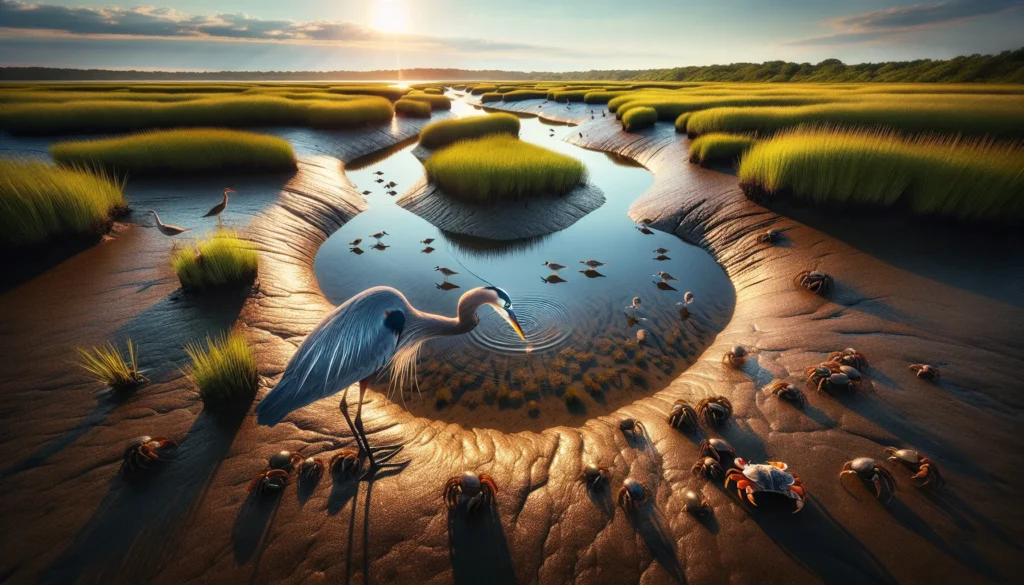
When I first heard the question, “what is a niche in biology?” I pictured a cozy nook where a plant or animal curls up and lives. Cute, but not quite. A niche isn’t just a place, it’s the full set of roles, requirements, and relationships that let a species survive and reproduce. In other words, a niche explains why a cactus thrives in the Sonoran Desert and fails miserably in a New England bog. Understanding niches opens up the hidden rules of ecosystems, who eats what, who competes with whom, and why some species can share space without knocking each other out.
Key Takeaways
- What is a niche in biology: the complete set of roles, resources, environmental conditions, and interactions that let a species survive and reproduce.
- Think of habitat as the address and niche as the job description that explains how a species makes a living there.
- A species’ fundamental niche is where it could persist, but real-world competition, predation, and disease narrow this to its realized niche.
- Species coexist by partitioning resources across time, space, and diet, reducing direct conflict and avoiding competitive exclusion.
- Niches change through niche construction, phenotypic plasticity, and evolution—from beavers engineering ponds to finches adapting beak sizes after drought.
- Ecological niche modeling and SDMs apply niche in biology concepts to map suitable areas and inform conservation, restoration, and invasion management.
[lAwpTSyeK9q0ck6QqsTkl]: The Core Concept: Niche Defined
I think of an ecological niche as a species’ “profession” and “operating manual” rolled into one. It includes the resources a species uses (food, water, nesting sites), the conditions it tolerates (temperature, pH, salinity), the time it’s active, and the interactions that shape its life (predators, competitors, mutualists). The classic phrasing is G. Evelyn Hutchinson’s: a niche is an n-dimensional hypervolume, the full multidimensional space of conditions and resources where a species can maintain a population. It sounds abstract, but the idea is simple: a species persists where its needs and tolerances are met.
Role, Requirements, and Tolerances
A species’ role is what it does in a community, pollinator, top predator, seed disperser. Its requirements are the specific needs: a salmon’s oxygen-rich, cool water: a lichen’s clean air: an amphibian’s moist, neutral-to-slightly-acidic microhabitat. Tolerances define the acceptable ranges. Think of a bell-shaped curve for temperature or salinity: outside the core range, performance drops, then fails. Even food size can be part of a niche, finches with different beak depths crack different seeds, effectively dividing the menu.
Niche Versus Habitat
Here’s the clean distinction I lean on: habitat is the address: niche is the job description at that address. Two species can live in the same habitat (say, a coastal marsh) but occupy different niches, one grazes on detritus at low tide, another hunts small fish in tidal channels. Habitat is where. Niche is how and why.
[tGJV3uP1stcenzS8SMD8w]: Dimensions of a Niche
Because niches are multidimensional, you can slice them along different axes and see new patterns.
Fundamental Versus Realized Niche
The fundamental niche is everything a species could use or tolerate in the absence of enemies and competitors, the full theoretical hypervolume. The realized niche is what’s left after real-life pressures squeeze it. Barnacles are the textbook story: in classic experiments, one species could live across a broad tidal range (its fundamental niche), but in nature it’s restricted high on the rocks because a competitor dominates the middle zone. Predators and pathogens shrink niches too. In short, the realized niche is the part a species actually occupies.
Specialization Across Temporal, Spatial, and Trophic Axes
Species often specialize by time (nocturnal vs. diurnal), space (canopy vs. understory, shallow vs. deep), and diet (seed size, prey type). Owls and hawks hunt similar prey but at different times. Anoles in the Caribbean partition tree trunks, crowns, and twigs. Reef fish separate by depth and microhabitat: desert plants stagger their flowering times to avoid pollinator pile-ups. This fine-grained specialization is how many species cram into the same patch of Earth without stepping on each other’s toes.
[7OrkdO_oYKCkLmjcp5e_q]: How Niches Shape Communities
Competitive Exclusion, Resource Partitioning, and Coexistence
Two species competing for exactly the same limiting resource can’t stably coexist, this is the competitive exclusion principle. But nature is rarely that blunt because species bend. Over time, they partition resources: warblers feed in different parts of the same spruce trees: Galápagos finches evolve beaks tuned to different seed sizes. Sometimes coexistence emerges because each species limits itself more than it limits others, through territorial behavior, specialized pathogens, or microhabitat preferences. The result is a mosaic: a community shaped by countless niche differences that dampen direct conflict and allow persistent diversity.
[HgdXNbdFii2Y_oqUQA51l]: Examples Across Scales
Plants and Pollinators
Flower shape, color, scent, nectar chemistry, and bloom time together define a plant’s pollination niche. Long, tubular red flowers often attract hummingbirds: blue and violet blooms with landing platforms tempt bees. Night-blooming white flowers pull in moths. On the pollinator side, tongue length, activity times, and learning behavior shape their niches too. When drought shifts bloom timing, mismatches can ripple, bees emerge before peak flowers, birds migrate after nectar wanes. That delicate timing is part of the niche.
Microbial Niches in the Human Body
Our bodies are a patchwork of microbial habitats: the oxygen-poor, nutrient-rich colon: the salty, sun-exposed skin: the acidic stomach: the moist, variable mouth. Each site filters microbes by pH, oxygen, immune pressures, and available substrates. Fiber-feeding gut bacteria thrive on complex carbs: skin specialists tolerate desiccation and lipids. Antibiotics, diet changes, and stress reshuffle these niches, sometimes opening space for opportunists like C. difficile. It’s niche dynamics playing out inside us, daily.
[j23yyzByPWANhpZF3e58L]: Niche Dynamics and Change
Niche Construction and Plasticity
Species don’t just take what the environment gives, they change it. Beavers build dams, turning streams into ponds and creating niches for fish, amphibians, and aquatic plants. Corals build reefs that alter waves, light, and nutrient patterns. Even earthworms engineer soils. On the flip side, many species show plasticity: flexible behavior or physiology that lets them tweak their niche use. A generalist like the raccoon shifts diet with seasons: plants adjust leaf chemistry and rooting depth under drought. Plasticity can buffer short-term change, while evolution (think finch beaks after drought years) reshapes niches over generations.
Climate Change, Disturbance, and Range Shifts
As temperatures rise and precipitation patterns wobble, the environmental slices defining niches move. Species track their suitable climates upslope or poleward, if they can. Corals bleach when temperatures exceed their tolerance: alpine plants creep higher until they run out of mountain. Disturbances, wildfire, storms, river regulation, reset filters, sometimes helping fire-adapted species but squeezing others. When timing shifts, interactions can fray: flowers peak earlier while migratory pollinators arrive “on old schedules,” and specialist predators miss their prey pulse. Range shifts and mismatches are niche stories written across maps and calendars.
[dC65JORCqPJ6qnmcMxgfF]: Studying and Applying Niche Concepts
Ecological Niche Modeling (ENM) and SDMs
To predict where species can live, ecologists use Ecological Niche Modeling and Species Distribution Models (SDMs). We pair occurrence records (museum specimens, community science, surveys) with environmental layers (temperature, rainfall, land cover) to estimate the conditions associated with presence. Algorithms like MaxEnt or boosted regression trees project those relationships across space and time to map suitable habitats. These correlative models are powerful, but they’re only as good as the data and assumptions. Sampling bias, missing biotic interactions, and extrapolating beyond observed conditions can mislead. Mechanistic models, which use physiology and energetics, complement ENMs by anchoring predictions to process.
Conservation and Invasion Management
Niche insights drive practical choices. For conservation, SDMs highlight climate refugia, identify corridors species might use to track shifting conditions, and flag populations at the edge of tolerance (prime candidates for protection or assisted migration). In restoration, understanding environmental filters helps select plant palettes that will actually establish. For invasions, modeling the potential niche of a newcomer supports early detection and rapid response, closing windows before species spread. Even urban planning taps niche thinking: design green spaces with layered structure and diverse bloom times, and you create more niches for pollinators and birds instead of a single, barren lawn.
[0P6Fqday0zyglVRYTn2gj]: Conclusion
So, what is a niche in biology? It’s the living blueprint that links an organism to its world, what it needs, what it does, and how it fits among neighbors and constraints. Once you see niches, communities stop looking like random collections and start feeling like carefully arranged ensembles. The fun part is noticing them in daily life: bees choosing certain flowers, shorebirds feeding on different parts of a beach, or even the micro-ecology of your sourdough starter. Keep an eye on the “job descriptions,” and the hidden logic of nature shows up everywhere.
Frequently Asked Questions
What is a niche in biology?
A niche is a species’ operating manual—the resources it uses, conditions it tolerates, timing of activity, and interactions with predators, competitors, and mutualists. Hutchinson described it as an n‑dimensional hypervolume: the full set of environmental and resource axes where a population can persist. It explains why cacti thrive in deserts, not bogs.
What’s the difference between a niche and a habitat?
Habitat is the address; niche is the job description at that address. Two species may share a marsh habitat yet fill different niches—one grazing detritus at low tide, another hunting fish in channels. Habitat answers where; niche explains how a species survives, reproduces, and fits into community interactions.
What are the fundamental and realized niche?
The fundamental niche is the full range of conditions and resources a species could use without enemies or competitors. The realized niche is what it actually occupies after competition, predation, and disease squeeze that range. Classic barnacle experiments show a broad fundamental tolerance narrowed to high rocks by a dominant competitor.
How does niche specialization allow species to coexist?
Complete overlap triggers competitive exclusion, but most communities avoid that via resource partitioning. Species specialize by time (nocturnal vs. diurnal), space (canopy vs. understory), or diet (seed sizes, prey types). Warblers forage in different tree zones, finches evolve distinct beaks, and owls versus hawks hunt similar prey at different times.
What is niche breadth in biology, and why does it matter?
Niche breadth describes how wide a species’ usable environmental and resource range is. Broad-breadth generalists tolerate varied conditions and diets; narrow specialists excel in tight ranges but are sensitive to change. When people ask what is a niche in biology, niche breadth clarifies why some species adapt readily while others struggle.
How do ecologists measure niche overlap between species?
Ecologists quantify overlap by comparing resource use or environmental space. Methods include diet or habitat data, stable isotopes, and indices like Schoener’s D or Pianka’s overlap. Modeling in trait or climate space also estimates shared hypervolumes—the multidimensional niche in biology—helping predict competition, coexistence, and potential invasion risk.